
← Back To Blog
99designs vs DesignCrowd Which Platform Wins in 2026

A marketing lead needs a new logo, packaging direction, and campaign graphics before the next launch meeting. The brief is ready, the budget is limited, and nobody wants to spend days reviewing attractive concepts that can't survive a second asset. The obvious search is 99designs vs DesignCrowd, but the core decision isn't just premium quality versus low price.
A contest platform changes the team's workload. Someone must write the brief, review submissions, give feedback, manage finalists, approve files, and keep the resulting visual system consistent. A lower contest fee can become expensive when internal review time and rework grow. A higher fee can be wasteful when the project needs fast exploration rather than a carefully managed premium process.
This comparison evaluates the two marketplaces through that operational lens. It considers platform scale, contest mechanics, pricing, submission volume, designer access, ownership protections, turnaround flexibility, and the risk of producing a logo that doesn't translate well to packaging, social assets, or campaign layouts. Teams that also need to verify typography across deliverables may find a practical companion resource in see Font Checker Pro features.
Introduction to 99designs vs DesignCrowd for Teams and Freelancers
Both services suit buyers who want several designers to interpret the same brief, but they create different management conditions. 99designs feels more structured and curated, while DesignCrowd emphasizes flexible budgets and a broad flow of submissions. That distinction matters most after the first concept arrives, when the buyer has to decide whether variety is helping or creating more work.
For a freelancer outsourcing overflow, the priority may be a usable concept that can be selected and refined without a long procurement process. A small agency has a different concern. It may need to protect a client's brand standards, preserve editable files, and repeat the process across several assets without making every project feel like a new experiment.
Marketing teams face a related problem. A logo contest can produce a strong mark, but the business outcome depends on how that mark behaves in real applications. If the same contest model is later used for packaging, social templates, email graphics, and sales collateral, inconsistent designer interpretations can create approval friction and a fragmented identity.
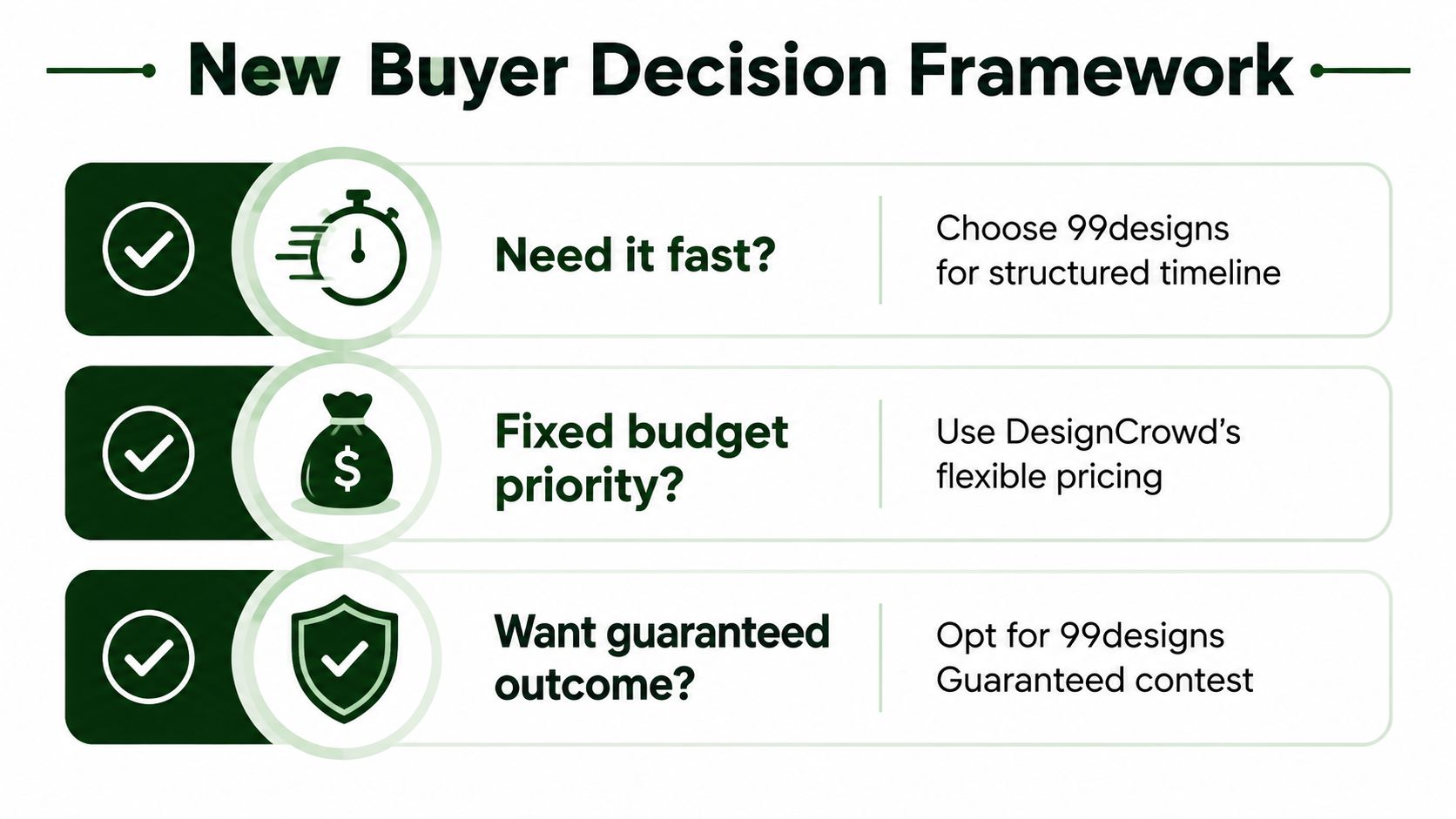
The platforms also have different risk profiles. On 99designs, the client chooses between Standard and Guaranteed contests, and the payment rules change depending on that choice. On DesignCrowd, the project budget is set before launch according to the selected package, and the client pays the full amount at the start. Those mechanics influence how comfortable a team feels experimenting.
Operational lens: Don't ask only which platform produces better-looking concepts. Ask which platform gives your team the lowest combined cost of contest spend, review time, revisions, and brand cleanup.
The sections that follow separate those costs instead of hiding them inside a simple winner label. 99designs is more compelling when control, curation, and structured execution matter most. DesignCrowd is more compelling when budget flexibility, submission volume, or compressed timing carries greater weight.
Platform Origins and Market Position at a Glance
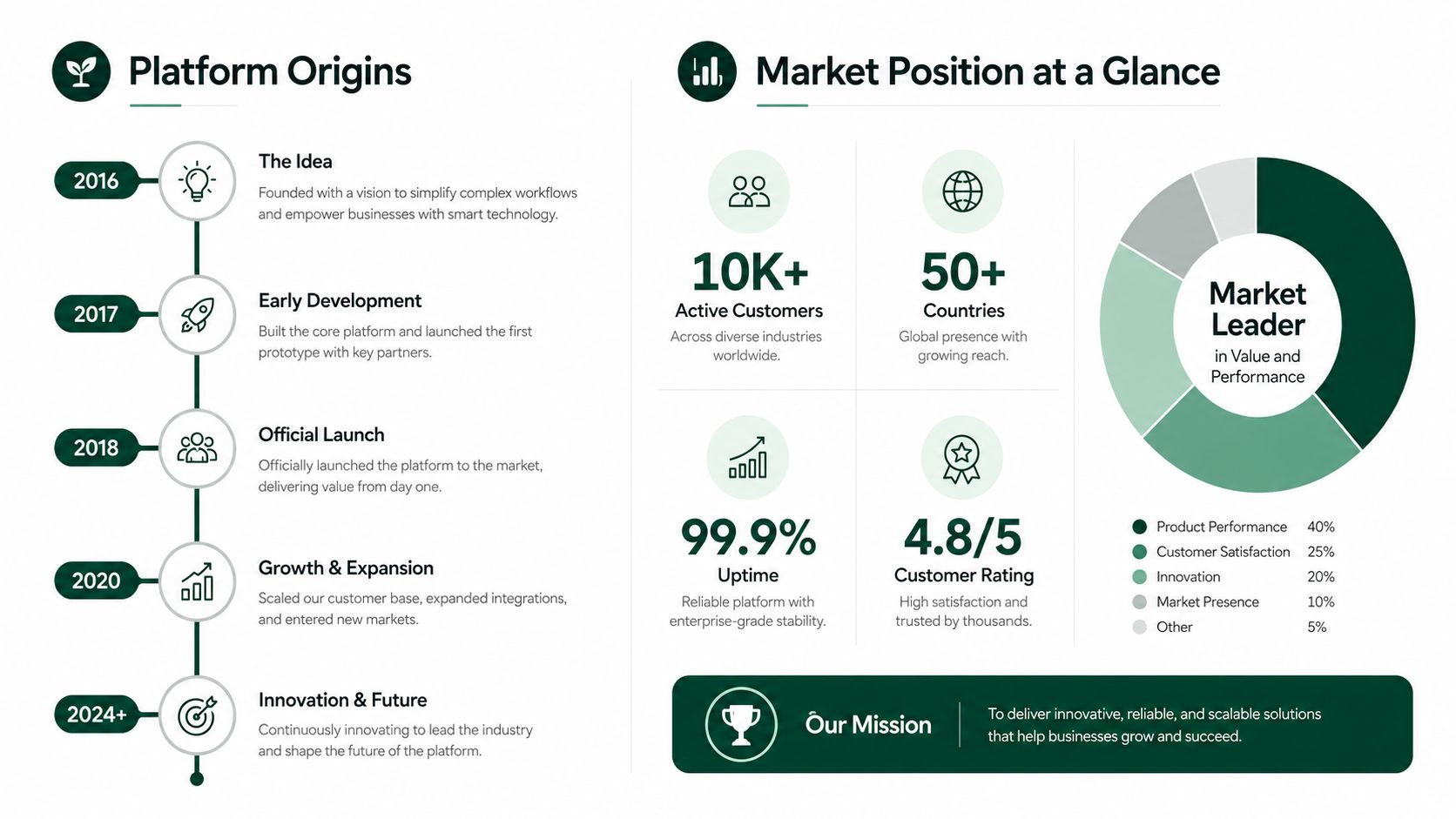
99designs and DesignCrowd share an important starting point. Both launched in 2008, making them peers in Australia's crowdsourced design market, but their public indicators show different levels of scale and capital access. A comparison published by 99designs on its history and differences with DesignCrowd says 99designs had about 1.4 million registered designers and had paid out about $200 million to designers, while DesignCrowd reported about 640,000 designers and $47 million in revenue to date.
Those figures imply a substantial divergence in marketplace size. The cited comparison describes 99designs as having roughly 2.2 times as many designers and more than four times the cumulative monetary figure cited for DesignCrowd. That doesn't prove every 99designs contest will outperform every DesignCrowd contest, but it helps explain why buyers often experience the services differently.
Capital access also shaped their paths. The same independent comparison records that 99designs raised $35 million from Accel in 2011, while DesignCrowd raised $3 million from Starfish Ventures. More early funding can support geographic expansion, platform controls, customer support, and designer acquisition, all of which contribute to the polished, tiered feel associated with 99designs.
Different scale creates different buyer expectations
99designs opened a U.S. base in San Francisco in 2010 and later reported more than 444,000 customers globally and over $200 million paid out to freelance designers, according to a published comparison of major graphic design platforms. DesignCrowd, founded by Alec Lynch and Adam Arbolino in 2007 and launched in January 2008, reported more than 35 million uploaded designs, more than 1.3 million graphic designers, and about $77.3 million or more in contests and designs in its public-about figures cited by that comparison.
The figures aren't perfectly equivalent, so they shouldn't be treated as a single league table. They do reveal each platform's emphasis. 99designs built a larger payment base and an earlier U.S. presence, while DesignCrowd highlights the volume of uploaded creative work and the size of its contributing community.
For teams managing brand assets, that history matters because platform philosophy becomes workflow. A buyer who wants tighter filtering and a premium contest ladder may prefer the environment 99designs developed. A buyer who wants a more open, budget-oriented marketplace may find DesignCrowd easier to enter. Teams that need to onboard team signatures without IT should also consider how the chosen visual identity will move into everyday branded communications.
A broader comparison of alternatives is available in sites like 99designs, but the central distinction remains practical: one marketplace leans toward controlled selection, the other toward accessible volume and flexibility.
How Contests and Hiring Workflows Actually Compare
The daily workflow begins with the brief, not the price page. A client describes the business, audience, visual direction, deliverables, and constraints, then waits for designers to respond. The quality of that brief determines how much interpretation the team must correct later, especially when the project involves more than a standalone logo.
99designs offers Standard Contests and Guaranteed Contests. In a Standard Contest, the client must choose one or more winning concepts within 60 days of payment, and may withdraw within that same 60-day window if no finalists have been chosen, as stated in the platform's contest payment and selection guidance. In a Guaranteed Contest, 99designs retains the payment if no winner is selected within 60 days and can determine what happens to the contest at its sole discretion.
That difference changes the buyer's risk tolerance. A Standard Contest leaves more room to stop when the work misses the brief. A Guaranteed Contest can attract stronger participation, but the buyer gives up the same degree of payment flexibility if the selection process stalls.
Timing is a procurement decision
Independent comparisons describe a standard 99designs contest as usually running for 7 days, with shorter deadlines costing extra. DesignCrowd offers selectable 2-day, 5-day, 10-day, and 15-day contest lengths at no extra cost, according to a comparison of contest marketplace timing.
That makes the choice less about which clock is universally better. A fixed, premium workflow can help a team avoid endless open-ended review. DesignCrowd's selectable durations can fit a campaign team that has a hard internal deadline and needs to compress procurement.
Direct hiring adds another path. Instead of comparing a field of submissions, the buyer selects a designer and collaborates with that person. That can reduce the noise of a contest, but it places more responsibility on portfolio review, availability checks, communication, and fit. Teams that want to evaluate a different hiring channel can also review how to post a job on Upwork.
Workflow judgment: Choose the contest model when creative exploration is the priority. Choose direct hiring when continuity, context, and an ongoing working relationship matter more than a broad first round.
DesignCrowd's rules add another financial checkpoint. Its project budget is set before launch based on the package chosen by the client, and its fee information says the client pays the full amount at the start. A German help article cited in the verified platform guidance describes the total as the client budget plus the contest fee, with no additional costs unless upgrades are purchased later. Buyers should therefore treat upgrades as procurement decisions, not incidental extras.
Pricing Structures Fees and Expected Design Volume
The clearest published price distinction is positioning. Independent comparison pages cite 99designs logo contest pricing from $299, with higher tiers reaching about $1,299. Those plans are described as offering around 30 to 90 concepts, a money-back guarantee, and, on top tiers, a dedicated manager and prioritized support, as outlined by the 99designs and DesignCrowd pricing comparison.
DesignCrowd is typically lower for comparable contests. Independent reviews cite logo contest pricing from $99 to $699, with fewer entry barriers for budget-sensitive buyers. The price gap is meaningful, but it doesn't tell the whole cost story because submission volume changes the amount of work the buyer must perform.
A published comparison on 99designs' own site gives a useful mechanics-based example. It says DesignCrowd's $719 plan delivers more than 150 designs on average from previous projects, while 99designs' $799 Gold package brings in about 90 designs, according to the platform comparison of expected contest volume.
Volume can increase the hidden bill
More concepts create more choice, but they also create more screening. A marketing manager must identify serious directions, reject near-duplicates, consolidate feedback, and keep stakeholders from selecting different visual languages at the same time. The cheapest submission isn't necessarily the cheapest decision.
Model the contest as two budgets:
- Cash budget: Include the contest package, contest fee, and any later upgrades. DesignCrowd's payment rules require the full amount at the start, while 99designs' contest type determines how much flexibility remains if no winner is selected.
- Review budget: Estimate the internal time needed to screen concepts, write feedback, compare finalists, and prepare the chosen direction for other assets. This cost is qualitative unless your team already tracks it, but it should still be part of the approval decision.
- Rework exposure: A high submission count doesn't guarantee that the winning direction will work across packaging, social layouts, or campaign formats. Ask designers to show the concept in the actual applications that matter, rather than judging only the mark.
Practical rule: Buy volume when you have a clear evaluation system. If nobody owns shortlisting and feedback, extra submissions usually create delay rather than value.
99designs may justify its higher spend when a dedicated manager, stronger controls, and a more limited concept field reduce coordination effort. DesignCrowd may make more sense when the team can absorb review work and wants to explore many directions within a fixed budget. The right comparison is therefore not package price alone. It's price divided by usable directions, plus the cost of selecting and refining one.
Talent Pool Quality Signals Ownership and Dispute Protections
Talent-pool size is a signal, not a guarantee. The verified comparisons cite about 1.4 million registered designers for 99designs and about 640,000 designers for DesignCrowd in one public snapshot, while another later comparison cites more than 1.3 million graphic designers for DesignCrowd. Because the definitions and publication dates differ, buyers should avoid treating those figures as perfectly like-for-like measurements.
The useful conclusion is narrower. Both services provide access to a large global community, but 99designs has historically presented a stronger premium and vetting emphasis, while DesignCrowd's model exposes buyers to a broader, more flexible flow. Buyers should inspect portfolio relevance, not just community size. A designer with strong logo work may still be a poor choice for packaging systems, responsive campaign assets, or production-ready handoff.
Quality is a governance problem
A contest winner can be visually impressive and still create downstream trouble. The team needs clear ownership terms, editable deliverables, font licensing clarity, color specifications, and a handover package that another designer can use. If those details aren't written into the brief and checked at approval, the platform's quality signals won't protect the brand from operational inconsistency.
Dispute and withdrawal rules deserve equal attention. 99designs' Standard Contest rules allow withdrawal within the 60-day selection window when no finalists have been chosen. The same rules say the client must select one or more winners within that window. Guaranteed Contests follow a stricter outcome structure because 99designs retains payment if no winner is selected and may decide the contest's disposition.
DesignCrowd's fee structure should be read with the same care. The cited help guidance describes the total as the client budget plus the contest fee, with later upgrades creating additional costs. That means a buyer comparing refund comfort must look beyond the headline prize and verify which fees are recoverable.
For multi-asset work, the safer process is the one that makes governance explicit. Require a mini style guide, confirm file ownership before handover, name decision-makers, and test the winning direction in several real applications. Brand consistency comes from the brief, review system, and handoff discipline as much as from the platform's designer pool.
Use Cases for Freelancers Small Agencies and Campaign Teams
A freelancer outsourcing overflow usually needs speed without losing control of the client relationship. DesignCrowd can suit a freelancer who wants a lower entry point or selectable contest duration and has enough design judgment to filter submissions independently. 99designs can suit a freelancer whose client expects a more managed, premium presentation and values a structured selection process.
The freelancer's hidden cost is explanation. Every weak concept consumes time that could have been spent translating feedback into a client-ready recommendation. A strong brief should include references, exclusions, intended applications, and the client's decision criteria before the contest begins.
For freelancers: Use DesignCrowd when you can absorb broad screening. Use 99designs when reducing presentation risk matters more than minimizing the initial contest spend.
Small agencies have a harder problem because they aren't buying a single design. They're building a repeatable production method that may be used across multiple clients. A lower-priced contest may help the agency explore options, but inconsistent handoffs and unclear brand rules can create white-label cleanup work. A more structured 99designs workflow may be easier to standardize when the agency wants defined tiers, support, and a controlled client review experience.
Agencies comparing contest sourcing with automation can also examine choosing between creative automation and designers. The relevant question isn't whether automation replaces judgment. It's whether the agency can separate repeatable production tasks from decisions that require original positioning and brand interpretation.
Campaign teams need a deadline model
A campaign team often values a predictable launch path over a large archive of concepts. DesignCrowd's selectable 2-day, 5-day, 10-day, and 15-day options can fit a compressed or staged campaign process, while 99designs' usual 7-day standard structure can suit a more fixed review calendar, as documented in the timing comparison cited earlier.
For recurring freelance operations, teams can also review AI tools for freelancers, particularly when the bottleneck is lead management rather than design selection. Earlybird AI is an Upwork automation platform that searches for jobs, prepares proposals, replies to leads, and supports call booking, so it belongs in the sales workflow, not inside the design-contest workflow.
For campaign teams: Decide the launch date first, then choose the contest duration and review owner. A platform cannot repair a process with no accountable approver.
The strongest use case for either service is a project with a defined creative question and a clear winner-selection process. Neither platform removes the need for brand governance when one identity must extend across many deliverables.
Final Recommendation and Migration Tips for New Buyers
The practical verdict is conditional, but it isn't vague.
Choose 99designs when the project carries high brand risk, stakeholders need a more structured contest environment, or the team values premium positioning and stronger workflow controls. Its higher pricing can be rational when reduced coordination and better-managed selection offset the initial spend. Choose DesignCrowd when the buyer has a fixed or constrained budget, wants more timing flexibility, or can manage a larger pool of submissions without turning review into a bottleneck.
A Guaranteed Contest on 99designs may fit a buyer who wants to commit payment to attract participation and accept the platform's stricter outcome rules. A Standard Contest may suit a buyer who wants the withdrawal option described in the platform guidance. On DesignCrowd, confirm the package, contest fee, payment timing, and upgrade terms before publishing.
Build the operating system before the contest
Use this launch checklist:
- Name one decision-maker. Stakeholder voting creates contradictory feedback and slows finalist selection.
- Write for applications, not admiration. Specify where the design will appear, including packaging, social assets, presentations, or email.
- Define rejection criteria. State what the brand must avoid, not only what it should resemble.
- Request the handoff package. Confirm editable files, exports, color information, typography requirements, and ownership terms.
- Set review windows. Give the team a fixed time to screen, consolidate comments, and respond.
- Test the finalist outside the contest page. A mark that looks strong in isolation may fail at small sizes or in a busy campaign layout.
If you're migrating from one platform to the other, don't carry only the winning file. Move the brand brief, approved colors, typography decisions, rejected directions, usage examples, and feedback history. That record reduces the chance that a new group of designers repeats old mistakes.
Re-evaluate the platform after the first completed project. Look at the number of usable directions, the time spent reviewing, the number of revision rounds, the quality of final files, and whether the design extends cleanly into the next asset. Those measures will tell you more about return on effort than a generic quality-versus-price verdict.
99designs wins for teams that need curation and process confidence. DesignCrowd wins for buyers who prioritize budget flexibility, timing choices, and creative volume. The best choice is the one your team can manage consistently after the contest ends.
If your agency also needs a steadier flow of freelance opportunities around its design work, visit Earlybird AI to see how its Upwork automation platform handles job discovery, personalized proposals, lead replies, and multi-user agency workflows. Use it to separate client acquisition from contest administration, then apply the same disciplined brief and review process to every project you win.